

What the Supreme Court’s Montgomery Decision Means for Georgia Truck Accident Claims
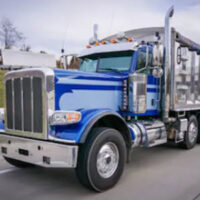
A truck crash may begin with one driver, but the story rarely ends there. A load has to be arranged, assigned, dispatched, insured, and hauled. By the time a commercial truck reaches a Georgia highway, several businesses may have touched the shipment before the driver ever gets behind the wheel.
A recent decision from the United States Supreme Court has changed an important legal argument involving freight brokers. The decision does not automatically expand liability after every truck accident, but it does allow certain negligence claims against brokers to move forward when they concern highway safety rather than economic regulation.
That distinction matters when the carrier’s safety history raises serious questions. Working with an experienced Alpharetta truck accident lawyer early in the process can help determine how the trucking company, freight broker, and other businesses involved in the shipment fit into the larger claim.
The Role of Freight Brokers in Commercial Trucking
Freight brokers do not usually own the trucks or employ the drivers. Their role is to connect companies that need freight moved with motor carriers available to haul the load.
That middle position can carry real consequences after a crash. A broker may have reviewed the carrier’s operating authority, insurance information, safety rating, or prior compliance history before assigning the shipment. Those details can matter when the carrier later causes a collision.
Commercial trucking depends on speed and coordination, but safety cannot be treated as background paperwork. When a broker selects a carrier with known warning signs, the question becomes whether that selection helped put an unsafe truck or unsafe driver on the road.
The Montgomery Decision Changed a Key Defense Argument
For years, freight brokers argued that federal law blocked many negligent hiring claims before the facts could be fully examined.
The argument came from the Federal Aviation Administration Authorization Act, known as the FAAAA. That law limits certain state rules tied to prices, routes, and services in the trucking industry. Brokers used that language to argue that claims based on carrier selection interfered with federally protected brokerage services.
In Montgomery v. Caribe Transport II, LLC, the Supreme Court rejected that automatic escape route. A claim based on a broker’s careless selection of a motor carrier can fall within the FAAAA’s safety exception when the claim concerns motor vehicles and highway safety.
That ruling does not make brokers responsible for every crash involving a carrier they selected. It means the claim does not get dismissed simply because the defendant is a broker.
Broker Liability Still Depends on the Facts
A freight broker is not liable just because it arranged the shipment. The focus remains on what the broker knew, what it could have learned, and whether it acted reasonably before assigning the load. A poor safety rating, repeated compliance problems, prior crashes, driver qualification concerns, or maintenance issues can change the analysis.
That is where the facts begin to matter more than the label. Calling a company a “broker” does not answer whether it ignored warning signs. It does not explain what information was available before the carrier was selected. It does not show whether the carrier’s safety problems were obvious, hidden, or never checked at all.
The Montgomery decision allows those questions to be tested instead of ending the broker claim at the courthouse door. The injured person still has to prove negligence, causation, and damages, but the case can move past a threshold defense that once stopped some broker claims early.
Carrier Selection Records Can Become Important Evidence
Once a broker’s carrier selection becomes part of the case, the focus shifts from labels to records. The investigation may include the carrier’s safety rating, inspection history, out-of-service violations, operating authority, insurance information, and records available before the shipment was assigned. Contracts between the broker and carrier, internal communications, and shipment records can also help explain how the carrier was selected.
Those records do not automatically prove negligence. They provide the context that the crash scene alone cannot show. A collision may happen in seconds, but the decisions that placed that truck on the road may have unfolded days or weeks earlier. Guidance from an Alpharetta truck accident lawyer can help identify which companies were involved in arranging the shipment and what records should be preserved before they become harder to obtain.
When More Than One Company May Be Responsible
Commercial truck litigation often requires a closer look at the businesses behind the load. The driver may have made the mistake that caused the crash, but that does not end the investigation. The motor carrier, freight broker, maintenance provider, cargo-loading company, or another business connected to the shipment may each have played a role before the truck reached the roadway.
Recent guidance from the Supreme Court reinforces that claims involving freight brokers deserve to be evaluated on their facts rather than dismissed simply because a broker arranged the shipment. That does not mean every broker bears responsibility. It means broker conduct, carrier selection, and available safety information can become part of the liability investigation.
Contact Cheeley Law Group
If you were injured in a commercial truck accident, the driver may not be the only party whose decisions need to be investigated. Freight brokers, motor carriers, maintenance companies, and others involved in the shipment may have information that helps explain how the crash happened.
At Cheeley Law Group, we understand how to investigate complex trucking claims involving multiple companies and layers of responsibility. Contact us to speak with one of our trusted Alpharetta truck accident lawyers and learn how we can help identify the parties involved, protect critical evidence, and pursue the compensation you deserve.
Sources:
- Supreme Court of the United States, Montgomery v. Caribe Transport II, LLC, No. 24-1238 (May 14, 2026): supremecourt.gov/opinions/25pdf/24-1238_1b7d.pdf
- 49 U.S.C. § 14501(c)(2)(A), Federal Aviation Administration Authorization Act Safety Exception: lfmcsa.dot.gov/registration
- Federal Motor Carrier Safety Administration, Registration and Operating Authority: fmcsa.dot.gov/registration